Words


Usually, whenever I hear someone mangle the English language I just want to scream. Now, however, my ears are on high alert for daft language mash-ups, because I have a new mission in life: to get an original entry in The Eggcorn Database.

An eggcorn is one of those words or phrases that has come into existence because someone doesn’t know or understand the actual thing they intend to say. For example:

→ This rain all goes well for next year’s crop… (augurs well)

→ My fridge gave up the goat… (gave up the ghost)

→ The ancient manuscript was written entirely in sandscript… (Sanskrit)

→ She had big pus jewels on her face… (pustules)

… and so forth. These ones I’ve heard myself (The ‘sandscript’ one surfaced in a tv documentary that should have known better – I laughed about it for hours), but the Eggcorn Database contains many that I’ve never encountered. It’s hilarious reading.

An eggcorn must be more than just an ordinary linguistic mistake. There has to be some kind of logic in the error that illuminates the circumstances under which it came about. It’s kinda easy to see why old documents from dusty Middle Eastern countries would be written in ‘sandscript’, right?

Remember to vote for me in the Philosophy Blog War!
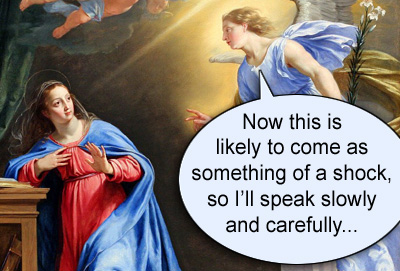
Mark my words: Google is the Roman Empire of web colonization, and the beginning of its decline is already being chalked in big letters.

Honestly, their rise in profile is commensurate with their increase in stupidity. I’ve talked before about the impending disaster of the Ne’er-Do-Evil, but consider this latest piece of idiocy: Google’s lawyers have taken action against several media organizations in an effort to stop them using the word ‘google’ as a verb unless they’re referring directly to a search made on the Google engine.

HELLO GOOGLE! IS ANYBODY HOME?

I almost wept at their daftness. Well I would have, but it’s hard to pull the kleenex out of these damn velcro pockets without making a mess. And everyone knows that tiny bits of kleenex are almost as difficult to hoover up as styrofoam or q-tips.

Did Google somehow just forget which century they’re living in? Do they actually read anything online? Did someone remove the word ‘ubiquity’ from the Google Law Department’s dictionary?

Google has, up until recently, had everyone believing that they have grokked the internet paradigm for Century 21, but in this startlingly moronic lunge for control over the idiom, the concepts involved seem to be running off Google’s lawyers like jello off teflon.

Spam Observations #27

My pal Tony wrote to me this morning asking me the question:

has your energy level been down newly or still jaded all the time? I indubitably am, that is why i am radiant i came upon

http://www.pleaseflushmymoneydownthetoilet.com

Now this is obviously someone who has not learned their English as a first language, but this begs the question, where exactly have these annoying pests learned to write like this?

Look at those words: ‘jaded’?; ‘radiant’; ‘indubitably‘?

From Daffy Duck cartoons, perhaps? That would explain an awful lot.

Enunciation #1

Light Me Up!

The most recent effort in Australia to turn people off the idea of smoking has involved a confronting television campaign, and the printing on the cigarette packets of very graphic images of the effects of the habit; pictures of mouth cancers, rotting teeth, limbs with gangrene and so forth. Here’s a link (not for the squeamish).

Up until now, the packets have carried simple printed warnings, but the new ones are starting to appear on the shelf.

Last night a young woman beside me in the supermarket asked for a pack of Benson & Hedges:

“I don’t mean to be difficult, but can I get a packet without the scary photo? You know, just one with the warning that says ‘Smoking Kills You’?”

Even though that last story was told as an amusing anecdote, it points, as some of you quickly realized, to some fundamental and important ideas about sound and the way we perceive it.

The question “What if we could have the sound of nothing, rather than silence?” is not a question about sound. It is a question about psychology. Many questions about sound are.

My director continued:

“What I mean is that sound, you know, when you’re out in the middle of nowhere and there’s nothing there… You know, not silence, but an absence of sound.”

And, although there’s a complete logical stump-jump here, I do in fact know exactly what he means.

Of course there is no such thing in the natural world as ‘an absence of sound’.

The quietest natural environment in which I’ve ever been was a cave in Jenolan in Eastern Australia. I was helping some friends complete a geographical survey. They were also divers, and needed to survey a section of the cave that was underwater. I couldn’t help much with that part of the exercise so I sat in the cavern as they disappeared into the inky black water and listened as their scuba bubbles trailed off into… silence.

There was no sound. No water lap, no dripping, no wind, no airconditioner, no next-door tv, no conversation down the hall, no computer drives, no distant traffic. Nothing. After a while, if I moved, any little noise I made sounded unnaturally loud. It was dead, dead quiet. Silence. Well, no actually. Not silence. I could hear my breathing. I could hear my blood moving. I could hear my heart beating. Wow, after a while it was actually noisy. I knew at that moment that human beings never, ever know true silence.

But we nearly all have some experience of that deep contemplative quietness of nature, or the dark black hush of the early morning hours, or the unbearable silent weight of gaps between speech at a funeral.

The question my director is really asking, then, is a different one: “Is it possible for us to have our audience feel that kind of mental silence within the bounds of what we are doing?”

And the answer, in my educated opinion, is that in this particular excercise we will achieve that effect. Because it’s not about the sound we put there, in that place where silence is, but rather, how we get there and what we have encouraged people to be thinking at that time.

Listening is only partially about hearing.

« Previous PageNext Page »