Regular readers of The Cow will know that I don’t much go in for blog memes, but also that I do make the occasional exception. Yoo has thrown down the The Atheist Thirteen Gauntlet and so, in light of all the current religious insanity in these parts, and my increasing concern that rationality is being eroded faster than a sandcastle in a tsunami, I’m sitting in The Comfy Chair for this one. Mr Parkinson, let the questioning commence:

Q1. How would you define “atheism”?

Well, as I said in comments on my post God Creates Atheists I’m more inclined toward the Wikipedia definition that says that atheism ‘…as an explicit position, either affirms the nonexistence of gods or rejects theism. When defined more broadly, atheism is the absence of belief in deities, alternatively called nontheism’ than the more conservative Oxford Dictionary interpretation that it is ‘the belief that God does not exist’.

I believe that there is no persuasive evidence for the existence of a God or Gods, and no reason to expect that any such evidence is likely to be forthcoming. The Oxford definition implies the need for proof of a negative, which is scientifically foolish, so I try and avoid falling into that particular pitfall. I hold that the likelihood of there being such a creature as God, especially a personal God that has any interaction with me or cares about what I do, is as remote as the likelihood that there are fairies or angels or unicorns.

Q2. Was your upbringing religious? If so, what tradition?

I was raised in an Anglican Christian church-going family and attended church every Sunday until about the age of 15 or 16, if I remember correctly. I sang in the boy’s choir and was ‘Confirmed’. In my teens I also believed that Tarot Cards could tell the future, that the Earth was being visited by aliens and that homeopathy could make my flu go away.

Q3. How would you describe “Intelligent Design”, using only one word?

Subversive.

Q4. What scientific endeavor really excites you?

The work by mathematicians like Stephen Wolfram and Stuart Kauffman on the theories of emergent complexity and their application to the way we understand the world. I am completely fascinated, perhaps to the point of obsession, with this subject. From following their work (which is substantiated by many other lines of research), I agree with them that is possible that very simple rules underpin all the extraordinary, vivacious, astonishing intricacy of the living universe.

(And if one more evangelizing Christian thinks that posing the question “Aha! Yes, but who made the rules!” is clever, or even pertinent, I may very well turn violent).

Q5. If you could change one thing about the “atheist community”, what would it be and why?

Well, I’ll interpret this question a little more widely than it might be intended, if I may, because my own view is that atheism follows on from adopting the basic tenets of proper critical thinking (although I know there are people who would disagree with me on that). So. If I had the means I would give the JREF and people like them billions of dollars in cold hard cash. Religions, especially the legacy religions like Catholicism and to a certain extent Islam, are cashed up in a manner that makes them extraordinarily powerful. The newer Evangelical religions, and whack-job cults like Scientology, are also rapidly gaining ground. Fear is a tremendous motivator when it comes to reinforcing religious belief, but there can be no doubt that in the Great Gears of the Irrational, money is the lubricant. The ‘atheist community’ (whatever that means), and more generally the skeptical community, both need money for education. Education is the best tool with which to fight superstition.

Q6. If your child came up to you and said “I’m joining the clergy”, what would be your first response?

“Here, my child, I’ve had your robes in the closet waiting for this moment. Welcome to the Church of the Tetherd Cow.”

Oh. Sorry, you meant a conventional religion didn’t you? Why would a child of mine ever want to do that? They’re not insane.

Q7. What’s your favourite theistic argument, and how do you usually refute it?

Favourite? Hmmm. Interesting word. It kind of depends so much on definition – Paul Davies, in his book The Goldilocks Enigma, puts up persuasive arguments for some kind of ‘creator’ of our universe, but it’s such a theoretical, distant and, to my mind, entirely inscrutable entity that it recedes into meaninglessness for any practical consideration. It’s a position that is quite literally irrefutable, and as a consequence, interesting to consider, perhaps, but pointless to debate.

As far as arguments for a personal God go, then the best one that I’ve ever had advanced to me came from a dear personal friend who once studied to be a Catholic priest (and who is still quite devout, despite being a gay man and therefore an abomination in the church in which he worships – go figure). This is how he put it (it was much more skillfully rendered than this, so I apologize to him for making it simplistic for the sake of brevity. I think he would agree that the essence is the same):

If your car breaks down (assuming you know nothing of mechanics) you take it to a mechanic who will have the knowledge to diagnose the problem, the ability to tell you what’s gone wrong, and the skill to fix it. You don’t need to understand much at all about the process to be able to get back in your car and drive away happily. What you do have to do, though, is put your trust in someone with more knowledge and skill than yourself in an area in which your expertise is limited. So, says my friend, we should use that same reasoning when it comes to God. In other words he argues that we should listen to those people who have thought more deeply and studied more widely, when it comes to religion, than perhaps we have done. And trust their judgement.

It’s a cogent point of view. And it’s not entirely easy to refute, if you think about it. But its weakness, in my view rests on a problem that besets religions and all other irrational belief systems at their very core. It is this: human beings are so very easily deceived by themselves and others, especially when the payoff is perceived to be high. For instance, if your mechanic does a bad job, your car starts sputtering and groaning and you take it back for another look. It’s pretty obvious, as is the quality of his work. If it keeps happening, you go find another mechanic. But if your priest does a bad job, and screws up the absolution of your sins, how are you ever going to know? “Just trust me,” says your priest – but unlike the mechanic, he is unable to offer you any graspable proof that he’s doing his job to the best of his ability. Or at all. He could be fooling you – how would you know? Worse, he could be fooling himself – how would either of you know…? Of course, he says that he has studied Aquinas and Paley and Hume and Pascal, and you know he speaks fluent Latin and has kissed the Pope’s ring, but really, he is just a human man and as easily deceived as anyone else. As are all the people he has studied. I think you can see where I’m going with this.

And if you think you’re the kind of person who can’t be fooled, you’re wrong.

Q8. What’s your most “controversial” (as far as general attitudes amongst other atheists goes) viewpoint?

I’m not sure what this question’s getting at. It seems to me that the only ‘controversial’ viewpoint an atheist could really hold (among an atheist community) is a belief in something irrational. I try not to hold such beliefs.

(I do maintain that the Earth is hollow and home to a superior race of lizard-like Supreme Overbeings, but that’s obviously a matter of fact, not an irrational claim).

Q9. Of the “Four Horsemen” (Dawkins, Dennett, Hitchens and Harris) who is your favourite, and why?

I don’t really do ‘favourites’, but Harris plays to my sensibilities best I guess. Dawkins is a little brash, if completely coherent, Dennett rather rarified, but indisputably eloquent, and Hitchens a little too ‘rock star’ but amusing and credible. Personally, I think we should try very hard not be divisive, but instead use our common strengths to allow us to put forward simple and effective arguments in favour of critical thinking.

Q10. If you could convince just one theistic person to abandon their beliefs, who would it be?

I don’t believe it would make a jot of difference to convince just one theistic person. Think about it: if The Pope renounced God tomorrow, they’d simply replace him, no matter what his reasons or how good an argument he put up. Single people do not make religions. Religions are created by a mass need for belonging. We have to supplant ‘religion’ as the fulfillment of that need with a stronger and greater respect for Humanity on its own terms. We need to outgrow superstition and look squarely into the face of truth. It’s a frightening prospect to embrace. I should know – I did it and it scared the crap out of me, and still does.

But one thing it didn’t do is turn me into an axe-wielding hedonistic anarchistic psychopath with loose morals, bankrupt ethics and a coke habit.

I was already one of those.

___________________________________________________________________________

So there you have it. I’m not going to tag anyone with this – if you feel like it would be helpful to wave the flag, feel free to have at it and let us know.

Ouch

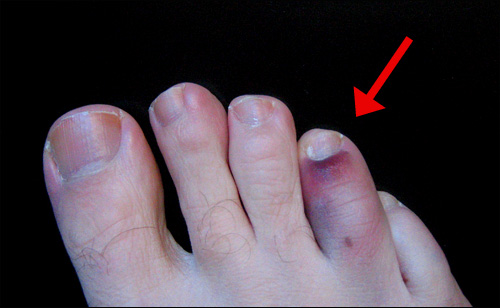
And this little piggy went clubbing, drank one too many Lemon Ruskis, got into a punch-up with a Samoan bouncer and spent the night in the lock-up.

Show Me...

One of the great joys of living in a society with a relatively high secularly-inclined population with a penchant for larrikanism, is watching the occasional clashes between the church and the heathens when they occur.

This time it all started when someone (the Catholic Church says it wasn’t them and the Catholic Premier of NSW, Morris Iemma, says it wasn’t him) decided that any form of protest of the upcoming World Youth Day (or as some wag has pointed out: World [Roman Catholic] Youth [if you’re a bishop] Day [more like a week]), is not acceptable. Especially, it seems, if that protest is in the form of a t-shirt that might ‘annoy’ the pilgrims. The Sydney constabulary have duly had special laws created for them, without consultation from the very great proportion of the non-Catholic community, that give them quite surprising leeway to apprehend protesters, pranksters or even completely innocent bystanders on the flimsiest of pretexts.

Of course this kind of stupidity is, thankfully, still treated with the derision it deserves by a goodly number of Australians, to the point that one beloved Sydney entrepreneur, Remo Giuffré, the man behind the Remo General Store, is running a contest to see who can come up with the best t-shirt slogan for the event.

I want about ten of these.

A Boring Image

Now that pretty much everything you can imagine has been turned into a movie monster, from the recombined pieces of corpses through cars, atmospheric moisture, dolls, dogs and dinosaurs, writer/director M. Night Shyamalan, director of such memorable moving pictures as, well, OK, only The Sixth Sense, has turned, for his latest effort, to that ultimate Creature of the Night: the larch. Yes folks, I’m giving away the plot. In his new film, The Happening, the trees did it.

You will recall that some time ago I wrote that I wasn’t going to get into the habit of reviewing movies here on The Cow unless they were very very special movies…? Well, this is a very very special movie. Oh yes – ‘special’ in the way we used to be told to refer to the kids with learning disabilities in school.

Like Danny Boyle’s execrable Sunshine, Shyamalan’s The Happening commits the Number 1 Crime of science fiction; it is dumb. And, as if it’s trying to get one up on Sunshine, it also commits the Number 1 Crime of movies-in-general: it is boring. This film is dumb and boring. And annoying.† About twenty minutes into The Happening I contemplated emulating one of the film’s pheromone-addled humans and seeing if I could stuff enough popcorn up my nostrils to kill myself.

The story begins with a relatively intriguing stage-setting sequence in Philadelphia’s Fairmount Park where a young woman begins babbling incoherently to a friend and then meticulously removes a chopstick-sized hairpin from her hair and inexplicably plunges it into her jugular. Other people around the park seem bewildered and disoriented, and screams echo from somewhere in the distance. Elsewhere in the city, Elliot Moore (Mark Wahlburg) a science teacher in a local high school, is enquiring of his class if they’ve ever heard of Bee Colony Collapse Disorder (a mysterious catastrophe that is, in actual fact, devastating honey bee colonies in the USA) and asking the students to put forth some explanations for this baffling phenomenon. The first kid to come up with a suggestion – “Some kind of disease?” – is in all probability right on the money, but this does not deter M. Night, via Marky Mark, from plunging headlong into the ridiculous.* Nope, Colony Collapse Disorder is nothing we could ever imagine: “It is,” pontificates Elliot weightily, “An Unexplained Act of Nature!™”

This scene, so very early in the piece, is an alarm bell that presages a series of inane pop-science clichés and baseless myths that will form the framework of the film. As Elliot strides around his classroom, attempting lamely to be Cool Mr Science Geek, all I could think was “Well, if American science teachers are anything like this, I now completely understand the success of the Intelligent Design movement in US schools”. It is true that Colony Collapse Disorder is perplexing and unexplained, but SO WHAT? Lots of things are perplexing and unexplained. Shyamalan quite obviously wants us to think that in this case it means that science is, somehow, inadequate for the job of providing any interpretation of CCD, and that is w-o-o-o-o-o-o-o-o-o… SPOOKY!!!. Spare me.

It’s a real shame, because the premise of the film – that plants might evolve to react to humans as a threat, and consequently take measures to eliminate them – is actually reasonably original, The Day of the Triffids notwithstanding. It even has some slight basis in the natural world. It’s the kind of thing that a writer with more skill might have made into a decent yarn.

Meanwhile, in the picture’s only truly unsettling sequence, across town a bunch of construction workers start throwing themselves off the top of a building. It appears that the city is suffering some kind of mysterious pandemic (which in the paranoid US lexicon automatically means ‘an attack by terrorists’). It’s about here that the film turns rapidly brainless. And never recovers. News reports inform us that some kind of airborne agent is causing people in the city area to kill themselves. Early warning signs of contamination are confused behaviour and incoherent speech. The teachers in Elliot’s school are told to send their kids home and lay low. Elliot and his teacher pal Julian (John Leguizamo) decide to grab their families and head out of town.

We are next introduced to Elliot’s wife Alma (Zooey Deschanel) who appears from the very start to have been affected by the terrorist mind chemical, but as it turns out, that’s just her acting style and/or the witless script. Elliot calls by to collect her and they head off by train with Julian and his daughter Jess (Ashlyn Sanchez) in tow.

The train gets stopped in Nowhereseville USA, and after what seems like an interminable series of explanatory scenes, Elliot & Co manage to hitch a lift with a goofy guy and his wife who are some sort of horticulturalists. Goofy Guy is the first to offer the idea that maybe the source of the mysterious toxin which is affecting the humans comes from trees. On the way to a place that the group has perceived as ‘safe’ (Wha? Did anyone else understand how these fruitcakes decided this?) they stop by Goofy Guy’s greenhouse where we discover that he has a penchant for hotdogs (what the crap was that about?) and that he talks to his plants (and plays music to them).

“They respond to human voices!” he exclaims, rolling his buggy eyes around, “It’s a scientific fact!” And suddenly I see what he’s getting at – by now it is plain that the performances from the plants in this film are considerably less wooden than those of the actors, and this could be readily explained if you care to speculate that maybe M. Night Shyamalan spent more time on the set talking to the trees than to the people. Seriously. The dialogue and the acting in this picture must conspire to be some of the worst to hit the screen since Robot Monster or Plan Nine From Outer Space. Let me give you an example:

Elliot (talking about Goofy Guy’s theory that the trees are responsible): Maybe that guy was right…
Alma: What do you mean?
Elliot: I don’t know.

That’s the only one I can remember verbatim, but there are dozens of these kinds of clunkers. Mark Wahlburg, who is usually quite capable of turning in a reasonable performance, seems to spend most of the picture barely keeping the effect of the mind-altering plant toxins at bay. He stumbles around the countryside (and the film in general), as the ad hoc ‘leader’ of his little group, like a clueless boy scout about to fail his orienteering badge. In one memorable and quite absurd sequence he shouts over and over “Give me a second! Just give me a second! Why don’t you give me a second to think?! Just give me a second!!!”

All of which takes up more than a few seconds of his thinking time, but gives the audience plenty of time to think that they should have gone next door to see Kung Fu Panda. What Marky Mark comes up with in his thinking time is the brilliant strategy that the group should try and outrun the wind. I’m not kidding. This guy teaches science.

I won’t bore you with a blow-by-blow of the rest of the story.‡ And it truly is boring. Just imagine a confused road movie with panicked groups of people driving around the bucolic Pennsylvania landscape stumbling alternately across corpses and unhinged-people-who-will-eventually-become-corpses. When one victim throws himself under an industrial lawn-mower I was right there with him.

It’s hard to believe that a film can be quite this awful. With the vacuous substitution of scene changes and spectacle (in the form of shock-tactic suicides) for plot, and mawkish sentimentality for emotion, the movie plays to the dimmest of the dim. It mixes up scientific fact and the truth about natural events with hokum and nonsense in a mad mélange of glib throwaway hippie philosophy and post Cold War paranoid hysteria. It’s like Walt Whitman rewrote The Day of the Triffids after watching What the Bleep Do We Know? On crack. And, inexcusably these days for a science fiction film, it perpetuates the idea that scientists are either mad or bumbling, and that science itself is clueless and ineffectual. Or evil. These things are bad enough, but unbelievably, it’s even worse than just that. At times during the film Shyamalan seems not to know whether he is making a sci-fi thriller or a comedy. A bizarre scene with Elliot talking to a house plant is played, confusingly, first for tension then for laughs. In the cinema where I saw The Happening, the audience was laughing at, not with. Portmanteaus of people committing suicide in bizarre ways (a guy offering his limbs to lions in the zoo; the man lying in front of the lawn mower) are so blackly humourous that it’s hard to believe Shyamalan was oblivious to the effect they might have on the audience. If he was aware of this, one is forced to ask the question: “Why? What the heck is he getting at?” Sequences which I presume are intended to be symbolic and ‘meaningful’ (the Exhibition home with its fake sushi plates and prop wine glasses; the solitary ‘Earth Mother’ in her isolated homestead; the lame horror feint involving a rope-swing on a creaky branch) are flat and stupid and go nowhere.††

And the obligatory Shyamalan ‘twist’ ending, so obvious and soporific that it would have been rejected from the lamest episode of The Twilight Zone, is made even worse by ringing loud with a cinematic “Tsk tsk tsk: you humans don’t know nuthin’!”

As I said at the outset, M.Night Shyamalan’s The Happening is a movie with learning disabilities; it is to the science fiction oeuvre what Basil Fawlty is to the hospitality industry: an uncoordinated, unlikeable, nonsensical caricature that is a peerless example of what not to do if you at all concerned about pleasing your customers.

Did I mention it was dumb?

Right.

___________________________________________________________________________

*”Good theory Timmy,” says Marky Mark, metaphorically tousling the kid’s hair, “But it doesn’t explain why it’s happening everywhere at once!” No it doesn’t. That’s because, in all likelihood, Colony Collapse Disorder had already spread widely before it was noticed. It’s distinctly probable that it’s happening ‘everywhere at once’ in the same way as, say, AIDS is happening everywhere at once if you examine it right now. It does not mean that it didn’t start somewhere. Read about CCD here and get some understanding of how science is actually approaching this problem. (One is forced to conjecture that for a person writing about a phenomenon of nature and science and offering it up dressed in the robes of plausibility, M. Night Shyamalan was actually not terribly concerned with those pesky things like facts…)

†The film is peppered with scenes of people committing suicide in graphic and novel ways. It is the filmic equivalent of someone poking you every time you’re just about to doze off to a nice comfy sleep.

‡And there are SO many risible scenes to choose from: such as when Elliot confronts the train guards about why they’ve stopped in some remote town:

Train Guard: “Because we can’t go any further.”
Elliot: “But what are we supposed to do?”
Train Guard: “You’ll have to make your own way from here…”
Elliot (apoplectic): “Why are you giving me information one bit at a time!!”
Me (mentally screaming silently at the screen): “Because you only asked two things and besides are quite clearly mentally retarded”

Or the sequence when Elliot’s group hears gunshots from over the hill; the party they’ve just split from (after they’ve been told to stick together, I might add) has been affected by the toxins:

Alma (wincing as gunshots ring out, and we realise the people are shooting themselves): We can’t just stand here. We have to DO something!
Elliot stands dumbstruck, like a deer in the headlights.
Alma (hysterical): We have to DO something. We can’t just stand here like those people who watch an accident and do nothing!
Me (screaming silently at the screen): No you dumb bitch, you can’t! But you could act like people who’d made a rational appraisal of the situation and haul your asses out of there as fast as possible before the plant pheromones get to you too!!!

††If you want to see a movie about what an inexplicable event like this would be really like if it happened, try Michael Haneke’s Wolfzeit (The Time of the Wolf). I guarantee you won’t leave that film laughing.

___________________________________________________________________________

Instant Bill Henson

*WARNING: This is a geeky tech post. If things such as hacking devices to make them more fun don’t interest you, you should go have a coffee and a donut.

A recent article over at Lifehacker* explains how you can hack your digital point-and-shoot camera via software and turn it into a ‘super-camera’. The hack requires that you own a Canon camera and have some (fairly basic) computer skills, but it is on the whole pretty damn easy.

I have a Canon IXUS55 and it’s a great little camera. Most of the images that I’ve shot specially for The Cow have been recorded with it. It’s pretty darn versatile, but now I can can do a multitude of things that were previously not possible with it, and yet, bizarrely enough, are still functions contained within the camera’s operating parameters.

One thing that has always bugged me about my IXUS is that there is no battery life indicator. Well, with the Canon Developer’s Hardware Kit (CHDK) firmware installed, I get my wish, plus a host of other neato functions. For instance, I can now override the shutter speed of the camera, allowing me to take exposures of up to 60 seconds in length. Or, if I am inclined, go the other way and fire the shutter at faster than 1/10,000th of a second. As another feature, the CHDK also allows me to save my images as RAW (that is, uncompressed) image files, something that is usually the domain of professional gear (most point-and-shoots compress the images to jpg, which means you lose some of your potentially useful exposure data).

With the addition of some executable software scripts, I can also turn my little Canon into a motion-sensing camera (ie, movement will trip the shutter), an intervalometer (to allow automatic ‘time-lapse’) and rig it to record lightning flashes. There are a number of other very useful scripts written by users, and the database is increasing all the time.

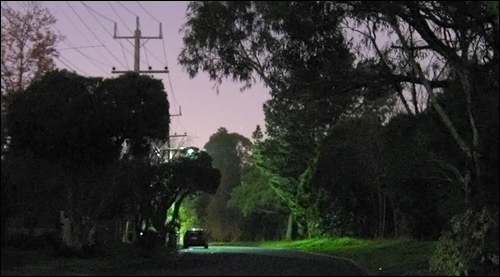
I’ve only just started playing with it, so nothing especially great to show you right now (I quickly snapped the image above just for fun), but next week I’m intending to give it a good workout so stay tuned!

Cow Cool Rating: ☆☆☆☆☆

___________________________________________________________________________

*I highly recommend that you check Lifehacker out. It’s not just geeky electro/computer/software stuff and I guarantee that no matter what your interests, you’ll find something there that’s totally cool. It is a little Windoze-heavy for my tastes, but at least they don’t totally ignore the Mac community.

___________________________________________________________________________

Pulling Birds

« Previous PageNext Page »