Ephemera


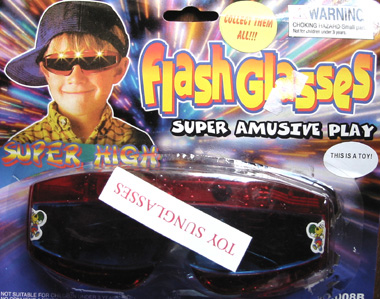
My lucky-dip present from my mate Pete at our writing group’s annual Christmas meeting was this ‘Super High’ set of sunglasses. The packaging promises ‘Super Amusive Play’ and warns ‘This Is a Toy!’ (just in case you get so Super High that you are tempted to wear them to your next United Nations press briefing).

But the best part is the contents description:

It says at the bottom: ‘Specifications colours and contents may vary from illustration.’

Fantastic! They could stick anything in this bag and not get sued.

But I know that the thing you all really want to see is how cool I look wearing them. Oh very well.

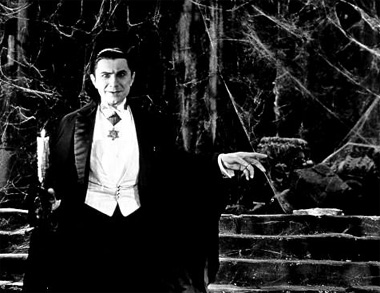
In Tod Browning’s Dracula, there’s a great scene where Jonathan Harker arrives at Dracula’s castle and The Count bids Harker follow him up the stairs to his rooms. Bela Lugosi, in his most famous and inimitable role, walks up the stone stairway, across which is spun a huge spiderweb. He passes through the cobweb without even disturbing so much as a thread. Harker looks on dumbfounded and is forced to push away the thick webs so that he can follow. A spider scuttles away into the darkness.

It’s an amazingly creepy moment, and few cinema special effects have ever surpassed it for me. How is the Count’s unnerving act achieved? Simply with an edit: Dracula approaches the web, cut to Harker’s reaction, cut to Dracula on the other side of the web. Just like that.

You can pick up the Browning Dracula on DVD for a few dollars. It’s worth it. Sure, the script is lumbering and melodramatic by today’s standards, but I guarantee, if you sit in a darkened room with no distractions and immerse yourself in the black and white world of Browning’s interpretation, you can’t fail to be enveloped by the dark, dank atmosphere and the claustrophobic story.

If that scene was being made today, it would go very differently. Dracula would beckon Harker, and turn with a swirl of his cape into a tight close-up. Harker would not see The Count’s face morph for an instant into the visage of some hideous fanged-demon. Dracula would approach the cobweb, which would unwind strand by strand around his dark form. He would pass through the untwining web which a digital spider would then re-spin behind him. The sequence would have fifteen different CGI shots, thirty or forty cuts and a whole swag of obvious over-the-top sound effects. It would be impressive, possibly, but it would not be in the least bit creepy.

The modern cinema of the fantastic has lost its imagination. It has also lost its respect for the ability of the audience to have an imagination. In the Browning Dracula the spookiest moment of Dracula passing through the spiderweb happens way off screen, deep in the imagination of the viewer. No amount of clever CGI can ever hope to compete with that.

It’s time for ideas again. We’re all tired of seeing intricately detailed dinosaurs, gravity-defying superheroes and toothy aliens that look like they have bad head colds. We’ve seen it. It’s boring.

How about this for an idea Hollywood? Take away a third of the budget you spend on special effects and put it into creating some decent original stories. And for Pete’s sake, take some risks for a change.

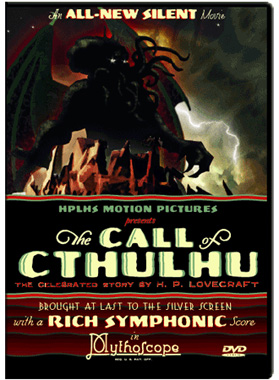
Last week, a couple of friends and myself watched a DVD made by The H.P. Lovecraft Historical Society: an interpretation of one of Lovecraft’s ‘Cthulhu Mythos’ stories, The Call of Cthulhu.

The HPLHS* is basically a group of dedicated fans, who have, through an effort of sheer will and hard work (and not a little inspiration) done something which mainstream cinema has comprehensively failed to do – they have brought the peculiar storycraft and ambience of Lovecraft successfully to the screen.†

I have to say that I wasn’t expecting too much. I didn’t even know they were doing a film, and, well, let’s be honest – films that come out of fandom are rarely things you want to watch, let alone tell anyone you watched. But the fact is, these guys really pulled it off. And the main reason they pulled it off should be highly instructive for a lot of the people who make up the lumbering bloated juggernaut that is Hollywood.

That reason can be summed up in one succinct thought: they were clever. Instead of even attempting to compete with the high gloss, surround sound and expensive visual effects of mainstream movies, the HPLHS have elected to depict Lovecraft’s tale in the manner of the time in which it is set. The Call of Cthulhu is made as a silent movie.

It is a stroke of genius, and this simple, deft piece of insight has at once liberated the film-makers and illuminated the very essence of Lovecraft’s odd and unsettling writing.

It is easy to draw a direct line from The Call of Cthulhu to films such as Murnau’s Nosferatu, Wegener’s Vampyr and even Tod Browning’s Dracula, which is of course not a silent, but draws heavily from that tradition. The HPLHS film-makers have avoided the major pitfall of re-creating a silent film by taking the whole process very seriously and not camping it up (quite unlike the poorly executed Nicolas Cage-produced John Malkovitch vehicle Shadow of the Vampire ‡).

I don’t really want to make this post a review of the film. There are plenty of reviews already on the HPLHS site and elsewhere. I did like it, and if you are a Lovecraft aficionado I really recommend you buy the DVD, because it will be a valuable part of your collection.

What I really want to talk about though is why this inexpensive amateur film succeeds so well where mega-dollar Hollywood blockbusters fail. And that deserves a Part 2.

*Warning: highly geeky, obsessive and possibly sanity-sucking site.

†There will undoubtedly be those who would ask “Why would anyone want to do that?” but we shall accept that they will inevitably be the first of the Shoggoth fodder when the crunch comes.

‡ Which failed to realize that when Murnau created Nosferatu it was one of the scariest things to hit the Silver Screen; Murnau was not directing his actors in some kind of camp romp, as the SOV writer and director obviously saw it.
I really love the Chinese game of Mahjongg, a beautifully simple, elegant and peaceful game that has a complex history, a grand tradition and is played widely to this day across the world. Mahjongg was introduced to the West in the 1920s via America.

My dad, who knows nothing about Mahjongg, but knows I love it, gave me this beautiful set for Christmas. He picked it up at a local market and was entirely unsure of its value or even if the game was intact. By doing a search on some faint text on the box I was able to determine that it is an English version made in the early 1920s by the Chad Valley Mahjongg Company. It is complete except for dice and counters which are not crucial and are easily substituted. There is a delightful ‘hand-made’ quality about the set and it speaks of an age where machines did not spew things out with rigorous precision and in vast quantities.

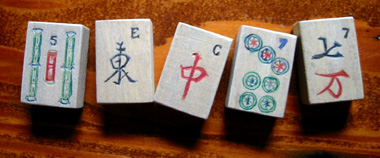
The tiles in the picture above are, from left to right:

The five of Bamboo (or Sticks), the East Wind, The Red Dragon, the seven of Circles (or Coins, or Dots) and the seven of Characters (or Numbers, or Cracks).

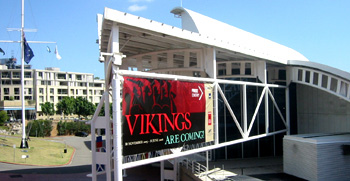
Well, faithful Cow-o-philes. Yesterday morning, as promised, I arose at the rooster’s crow and headed off to Sydney’s National Maritime Museum in search of Vikings. I arrived in plenty of time, not really being sure if Vikings are known for their punctuality. I think it is probably reasonable to suggest that being late for a raid on a Saxon village was poor form.

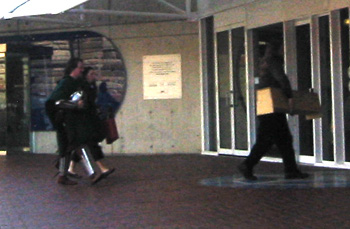
Indeed, there was already a horde of Vikings in full battle dress battering at the door when I got there. Well, I exaggerate for effect. There were one or two insouciant proto-Vikings hanging around the door with their friends. Aside from the beards and long hair there wasn’t much to indicate they were Vikings. I’ve seen scarier at my local pub. It was a bit anti-climactic I have to say. Before I even got a chance to ask them about their references they were ushered inside by museum staff.

I don’t remember ever being taught about the Vikings’ penchant for bright blue duffel bags in school, but I guess I could have been shooting rubber bands at Chris O’Reilly at the time.

There was a brief interesting moment when one of the Vikings carried in a strange wooden box:

Then it was all over. I’m sorry to say, that’s all that happened. I guess it is feasible that the armed naked dancing went on behind the closed museum doors, but alas, that remains only a speculation. Oh, as I was about to leave, I noticed another Viking unpacking something from his car:

He wasn’t exactly a late Viking, since the other Vikings were all technically early but I got the distinct impression that if there was any pillaging and looting going on inside the museum, he was in for slim pickings.

I did find out that the Viking exhibition starts in November and today’s successful applicants would be featuring for a few weeks. It is my further mission then, loyal readers, to go along once the show has opened and this time bring back proper evidence of Vikings alive and well (and hopefully armed and attired in full ferocity) in the Antipodes.

This just in from my friend Bronni.* The following email conversation then ensued:

On 26/10/2005, at 1:52 PM, Bronwyn wrote:

It’s pretty damn weird if you ask me….even if it isn’t made out of Linda McCartney, why anyone would buy health food recommended by a dead person is beyond me. Call me old fashioned.

On 26/10/05 1:56 PM, Peter wrote:

Colonel Sanders and Linda McCartney should get together and form a chain called ‘It Tastes Like Chicken’

On 26/10/2005, at 2:03 PM, Bronwyn wrote:

Or a band, “It Sounds Like Chicken” or a double act “It Sounds Like Chicken” with WINGS.

On 26/10/05 2:06 PM, Peter wrote:

Or just ‘Chicken Wings’ maybe.

It would certainly give new meaning to ‘Finger Lickin’ Good!’


*Who also gets credit for the headline. See, I just steal all my wit from other people who don’t have blogs.

« Previous PageNext Page »