Geek


My friends Pil and William were married on the weekend at a lovely gathering of friends and family. Pil is a big tennis fiend (notwithstanding the fact that she seems to break a bone every time she plays), and William is, well, a tiny bit of a Doctor Who fan.

I thought you guys might like to see their cake…

(Oh, yes, the ring-in is their dog, Daisy, who likes to act in a supervisory capacity in all things).

Well you’ve probably all read that Google has made a deal with the government of China to provide a google.cn portal that is censored according to that government’s whims. Yes, the corporate honchos behind Google, self-proclaimed Doers-Of-No-Evil and outspoken advocates of free speech and freedom of information are making a deal with a government that holds those values in contempt. Tsk. Shame.

To mark this occasion in Capitalistic line-blurring, my friend Kirke has launched a t-shirt that sums up the kind of thinking you can use if you want to take dubious moral stances in your day-to-day life. He can’t promise you’ll feel better about such ethical wavering, but at least you’ll be being honest.

Which is more than we can say for Google.

Well it’s not often that you get the scoop over boing-boing, so I have to gloat that we were well ahead of the wave here on The Cow:

This article from this morning about a guy who’s just discovered that FAEs can be used for underground pest control.

Yawn. So Last Century…

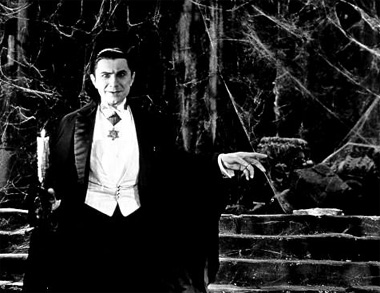
In Tod Browning’s Dracula, there’s a great scene where Jonathan Harker arrives at Dracula’s castle and The Count bids Harker follow him up the stairs to his rooms. Bela Lugosi, in his most famous and inimitable role, walks up the stone stairway, across which is spun a huge spiderweb. He passes through the cobweb without even disturbing so much as a thread. Harker looks on dumbfounded and is forced to push away the thick webs so that he can follow. A spider scuttles away into the darkness.

It’s an amazingly creepy moment, and few cinema special effects have ever surpassed it for me. How is the Count’s unnerving act achieved? Simply with an edit: Dracula approaches the web, cut to Harker’s reaction, cut to Dracula on the other side of the web. Just like that.

You can pick up the Browning Dracula on DVD for a few dollars. It’s worth it. Sure, the script is lumbering and melodramatic by today’s standards, but I guarantee, if you sit in a darkened room with no distractions and immerse yourself in the black and white world of Browning’s interpretation, you can’t fail to be enveloped by the dark, dank atmosphere and the claustrophobic story.

If that scene was being made today, it would go very differently. Dracula would beckon Harker, and turn with a swirl of his cape into a tight close-up. Harker would not see The Count’s face morph for an instant into the visage of some hideous fanged-demon. Dracula would approach the cobweb, which would unwind strand by strand around his dark form. He would pass through the untwining web which a digital spider would then re-spin behind him. The sequence would have fifteen different CGI shots, thirty or forty cuts and a whole swag of obvious over-the-top sound effects. It would be impressive, possibly, but it would not be in the least bit creepy.

The modern cinema of the fantastic has lost its imagination. It has also lost its respect for the ability of the audience to have an imagination. In the Browning Dracula the spookiest moment of Dracula passing through the spiderweb happens way off screen, deep in the imagination of the viewer. No amount of clever CGI can ever hope to compete with that.

It’s time for ideas again. We’re all tired of seeing intricately detailed dinosaurs, gravity-defying superheroes and toothy aliens that look like they have bad head colds. We’ve seen it. It’s boring.

How about this for an idea Hollywood? Take away a third of the budget you spend on special effects and put it into creating some decent original stories. And for Pete’s sake, take some risks for a change.

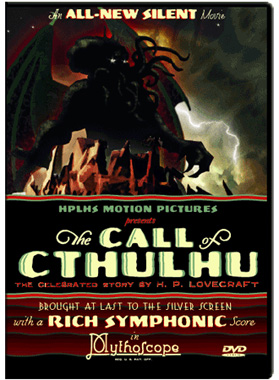
Last week, a couple of friends and myself watched a DVD made by The H.P. Lovecraft Historical Society: an interpretation of one of Lovecraft’s ‘Cthulhu Mythos’ stories, The Call of Cthulhu.

The HPLHS* is basically a group of dedicated fans, who have, through an effort of sheer will and hard work (and not a little inspiration) done something which mainstream cinema has comprehensively failed to do – they have brought the peculiar storycraft and ambience of Lovecraft successfully to the screen.†

I have to say that I wasn’t expecting too much. I didn’t even know they were doing a film, and, well, let’s be honest – films that come out of fandom are rarely things you want to watch, let alone tell anyone you watched. But the fact is, these guys really pulled it off. And the main reason they pulled it off should be highly instructive for a lot of the people who make up the lumbering bloated juggernaut that is Hollywood.

That reason can be summed up in one succinct thought: they were clever. Instead of even attempting to compete with the high gloss, surround sound and expensive visual effects of mainstream movies, the HPLHS have elected to depict Lovecraft’s tale in the manner of the time in which it is set. The Call of Cthulhu is made as a silent movie.

It is a stroke of genius, and this simple, deft piece of insight has at once liberated the film-makers and illuminated the very essence of Lovecraft’s odd and unsettling writing.

It is easy to draw a direct line from The Call of Cthulhu to films such as Murnau’s Nosferatu, Wegener’s Vampyr and even Tod Browning’s Dracula, which is of course not a silent, but draws heavily from that tradition. The HPLHS film-makers have avoided the major pitfall of re-creating a silent film by taking the whole process very seriously and not camping it up (quite unlike the poorly executed Nicolas Cage-produced John Malkovitch vehicle Shadow of the Vampire ‡).

I don’t really want to make this post a review of the film. There are plenty of reviews already on the HPLHS site and elsewhere. I did like it, and if you are a Lovecraft aficionado I really recommend you buy the DVD, because it will be a valuable part of your collection.

What I really want to talk about though is why this inexpensive amateur film succeeds so well where mega-dollar Hollywood blockbusters fail. And that deserves a Part 2.

*Warning: highly geeky, obsessive and possibly sanity-sucking site.

†There will undoubtedly be those who would ask “Why would anyone want to do that?” but we shall accept that they will inevitably be the first of the Shoggoth fodder when the crunch comes.

‡ Which failed to realize that when Murnau created Nosferatu it was one of the scariest things to hit the Silver Screen; Murnau was not directing his actors in some kind of camp romp, as the SOV writer and director obviously saw it.


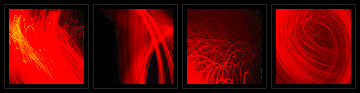
Camera Toss (The Blog) is pretty much exactly what it says – a blog about, and by, people who take pictures by throwing their cameras up in the air. It is linked to copious numbers of Flickr sets of images that are gorgeous, inspiring, bizarre and even funny.

The blog describes itself as “A showcase photo-blog for the best of camera tossing and general musings on this form of abstract photography.”

Personally, I would not be using my digital camera for these kinds of shenannigans, but apparently some cavalier people are happy to do so. There are some shots from cheap ‘toy’ cameras that use (gasp) film, which I think might be more in my line.

I notice there are no stereoscopic entries. Perhaps it’s time for me to get out my old Kodak Stereo Realistâ„¢ and get a-tossin’.

Go take a look at the site and you’ll see things like this, this and this.

« Previous PageNext Page »